

Can I Register As A Minority Using 23andme
The ability of multifariousness.
Estimates show that more than than 90 percent of the research into the genetics underlying disease has been conducted on people of European ancestry.
Whether this has been due to historical, cultural, economic or social reasons, we believe genetics and the study of disease and drug development should be for everyone. All ethnicities . All humans .
Our customer base includes large numbers of cocky-identified African Americans, Latinos and Asians. As nosotros increase our understanding of different populations, nosotros can better predict ancestry and perform fine-scale genetic mapping that tin can also exist crucial for detecting associations with disease via admixture mapping.
"23andMe presents a tremendous opportunity for African Americans to learn essential information about themselves, their families and their ancestry."
-
JUL 2011
We launched this genetic report of more than ten,000 African Americans in an effort to better sympathize the connection between Dna and disease.
-
OCT 2012
Published preliminary findings. View the presentation
-
NOV 2013
We kicked off our first African Ancestry Project, which recruited people with four grandparents from Sub-Saharan Africa. Our goal: to improve our knowledge of African genetic diversity.
-
DEC 2014
We published the first e'er genetic portrait of the United States, showing the complex mixture of African, Ethnic American and European beginnings.
-
APR/MAY 2016
We reached the milestone of 45,000 African Americans participating in 23andMe inquiry.
We received an NIH grant to help us develop a new analysis pipeline that may alleviate disparities in research.
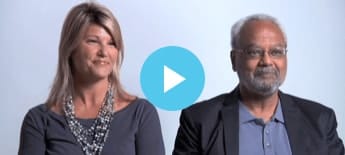
"We're distant cousins."
Play video
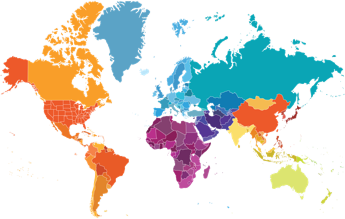
The offset genetic portrait of the U.s..
Using information gathered from the 23andMe Roots into the Future projection nosotros published "The genetic beginnings of African, Latino, and European Americans across the Usa," the first large-scale national mapping of genetic ancestry that reflects historical migrations. It appeared in the American Periodical of Human Genetics on Dec eighteen, 2014.
"Nosotros show that the signatures of contempo historical migrations can be seen in the DNA of present-day Americans. Furthermore, our results can inform the blueprint of medical genetic studies. For example, the presence of Indigenous American and African ancestry in European Americans may have implications for genetic studies of circuitous diseases."--Dr. Kasia Bryc, 23andMe Population Geneticist
Funding for more than multifariousness in research.
In April of 2016, the National Institutes of Health (NIH) funded a 23andMe report that could help alleviate some of the existing disparities in genetics enquiry between people of European ancestry and people of African, Latino and Asian ancestry.
With our information and this funding we aim to gain insights into genetic variants of import for populations that are underrepresented in current inquiry on wellness conditions and traits.

Henry Louis Gates, Jr., PhD
is the Alphonse Fletcher University Professor and Director of the Hutchins Heart for African and African American Inquiry at Harvard University. Dr. Gates earned his PhD in English Literature from Clare College at the University of Cambridge. Dr. Gates is Editor-in-Chief of TheRoot.com, a daily online mag focusing on issues of interest to the African American community. With Evelyn Brooks Higginbotham, he is the co-editor of the eight-book biographical encyclopedia African American National Biography (Oxford, 2008). Dr. Gates is as well the author of Faces of America (New York University Press, 2010), which expands on interviews he conducted for his critically acclaimed PBS documentary series of the same proper noun.
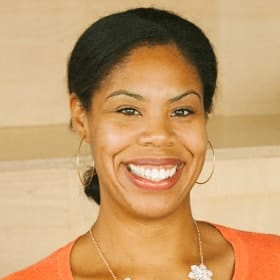
Erica Bakery
is an gorging genealogy researcher who has been researching her family unit tree since 2004 with the ultimate goal of tracing poorly documented African American branches of her tree back to Africa. Erica was an engineer at Google for over x years and now works at Slack Technologies. She's been an advocate for more multifariousness in Silicon Valley, and worked to push companies to be more transparent about the diversity of their workforce. In 2015 the noted tech journalist Kara Swisher singled out Erica as a woman to sentry in the coming years.
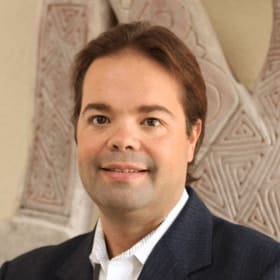
Carlos Bustamante, PhD
is Professor of Genetics at Stanford University. Dr. Bustamante earned his PhD in biology, along with an M.A. in statistics, at Harvard University in 2001. His scientific interests center on population genetics with a focus on analyzing genome-wide patterns of variation to accost fundamental questions in biology, anthropology, and medicine. His near current research focuses on human population genomics and global wellness including developing statistical, computational, and genomic resource for enabling trans- and multi-ethnic genome-wide association and medical sequencing studies of common human diseases. Dr. Bustamante is the recipient of numerous awards including a MacArthur Fellows Award.
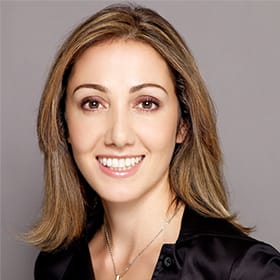
Pardis Sabeti, Yard.D. D.Phil.
Dr. Pardis Sabeti is Associate Professor at the Heart for Systems Biology and Departments of Organismic and Evolutionary Biological science and of Immunology and Communicable diseases at Harvard Academy, an Plant Member of the Broad Institute of Harvard and MIT and a Howard Hughes Investigator. Dr. Sabeti is a computational geneticist with expertise developing algorithms to discover genetic signatures of adaptation in humans and the microbial organisms that infect humans. She is a National Geographic Emerging Explorer, was named a TIME magazine 'Person of the Year' as one of the Ebola fighters and is lead vocalizer and co-song writer of the rock band Thousand Days.
Almost genetic studies have been conducted on people of European beginnings, so there is a gap in our understanding of the genetic factors that influence affliction among those of other ancestries. 23andMe sees an urgent need to scale research within non-European populations so all people tin can benefit from breakthroughs in genetic scientific discipline. 23andMe'southward spider web-based, large scale enquiry model is ideally suited to tackling this problem.
In 2011, 23andMe worked with the National Urban League and the Du Bois Establish to recruit 10,000 African Americans to participate in inquiry. The recruitment phase of the projection was highly successful and led to an increment in awareness of this research initiative equally well equally 23andMe's ancestry reports. This initiative took us from one,500 African Americans in our research database in 2010 to over 45,000 today.
Roots into the Future has enabled 23andMe to:
- Create a more ethnically diverse inquiry accomplice.
- Conduct research about people of non-European ancestry.
- Leverage 23andMe's bioinformatics expertise to study people of mixed ancestry.
23andMe presented preliminary research results from Roots into the Future at the 2012 American Lodge of Human Genetics Almanac Coming together. Those initial analyses confirmed previously discovered genetic associations with Body Mass Index, elevation, lupus, osteoporosis, type two diabetes, and migraines. This projection also enabled 23andMe to conduct a study of genetics across the United States, published in the American Periodical of Human Genetics in 2015. More recently, 23andMe has analyzed data on a much broader range of traits and conditions. We do not even so accept results to publish.
More than importantly, the project enabled 23andMe to submit and obtain funds from the National Institutes of Wellness to implement a new approach to genetic assay that benefits from the mixed ancestry of African Americans. Read more .
Is percentage of African ancestry correlated with disease risk for a broad range of diseases?
- Can we replicate discoveries from previous genome wide association studies (GWAS) in African Americans (prostate cancer, type 2 diabetes, etc)?
- Tin can nosotros replicate genetic findings in European populations in this African American cohort?
- Tin nosotros detect novel associations with disease in this accomplice?
The Tuskegee Syphilis Project, conducted from 1932 to 1972 by the U.Due south. Public Wellness Service, was performed to report the natural progression of syphilis in poor, rural blackness men in Tuskegee, Alabama. But in an egregious instance of misconduct, researchers withheld from these men information near their status, and the researchers also actively denied treatment for these men. The Tuskegee study was a gross and breathy violation of federal human experimentation guidelines and has been used as as educational activity instance e'er since. In dissimilarity with Tuskegee, our research platform has received and is being conducted but with standard Institutional Review Board (IRB) approval of the enquiry procedures. Any changes to those procedures must be reviewed and approved by the IRB before being implemented. 23andMe's IRB is an Clan for the Accreditation of Human Research Protection Programs (AAHRPP)-accredited visitor, Ethical and Independent Review Services, Inc. (Independence, MO and San Anselmo, CA).
No. Anyone who signs up for 23andMe's service is given the opportunity to consent to accept their genetic and other data used in research. They may then choose which surveys and questions to reply to.

Source: https://www.23andme.com/roots/
Posted by: wrendrithad.blogspot.com
0 Response to "Can I Register As A Minority Using 23andme"
Post a Comment